
How to Cure Neck Pain Fast?
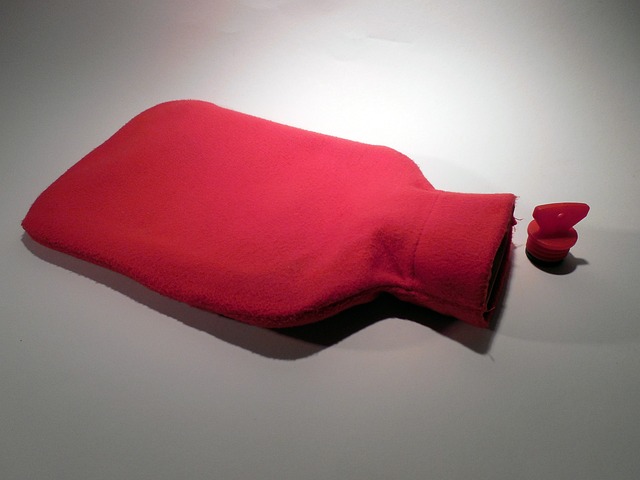
Is a Hot Water Bottle Good for Back Pain?

10 Effective Exercises to Relieve Back Pain


The core is essentially what holds the upper and lower body together and allows for efficient movement between the areas as well as providing protection and support of the spine. Your ‘core’ is more than just the superficial muscles that we can see on the eye, we have deeper more intrinsic musculature surrounding the spine. These deeper muscles need to be addressed and trained to build that strong ‘core’. A good idea to consider is that the core is a ‘bridge’ in-between the upper and lower body. A strong ‘bridge’ allows fluent movement back and forth, however disruption to the ‘bridge’ leads to the disruption of movement.
The ‘core’ is made up of:
1. Muscles that make up the entire torso
2. The muscles that support and stabilise the pelvis.
3. Muscles that support and stabilise the shoulder
The evidence?
* The aim of this study was to assess core stabilization exercise effects in reducing functional disability in patients with chronic low back pain (CLBP)
* After two months of rehabilitation there was a statistically significant increase in functional ability in patients who performed the core stabilization exercises five times a week and in patients who performed the core stabilization exercises three times per week.
* A statistically significant difference in functional ability was not recorded in patients who did not perform the exercises.
* The implementation of the core stabilization exercises leads to a reduction of functional
* disability in patients with CLBP
Why is the core so important?
The core is essential in protecting the spine from excessive load. Think of a glass object wrapped up in bubble wrap; the glass being your spine and the bubble wrap being your ‘core’. If the glass i.e. your spine is put under any sort of force the likelihood of damage occurring is very high. However, if covered in bubble wrap the likelihood of damage is reduced.What does it help with?
* Everyday acts. Brushing your hair or just bending down to tie your shoe laces all require use of your core.
* On-the-job tasks. Jobs which involving lifting, carrying etc all need a strong core to be done efficiently without injury, furthermore desk workers need a strong core to be able to obtain proper posture throughout their working day.
* A healthy back. Back pain is so prevalent these days and a strong core is essential in avoiding potential injuries occurring.
* Sports. Pretty much all sports require the use of your core. A strong core helps performance and reduces the risk of injury.
* Balance and stability. Your core stabilises your body, allowing you to move in any direction without to much stress.
* Good posture. Weak core muscles contribute to slouching and give you a more rounded appearance in your spine.
How do we build core stability?
These exercises target our deep core muscles. These deep core-stabilising muscles are extremely important for our spine integrity and health. The are responsible for stabilising each individual vertebra that make up our spine, in order to move our spine for function, we activate our superficial core muscles like our rectus abdominis and erector spinae. However, if these superficial core muscles attempt to move our spine, without our deep core muscles simultaneously stabilising each vertebral segment, abnormal movement patterns and shearing forces will occur int the spine, which can ultimately lead to back pain.
Front plank
* Lie on your belly with arms bent, elbows tucked to your side.
* Your fingers should be pointed forward, with legs straight and extended.
* Your toes should be curled slightly forward towards your shins.
* Lift your torso off the ground by sucking in your belly button and squeezing your glutes. Avoid arching your lower back.
* Focus on maintaining a straight head-spine-line
* Try hold this position for 30-60 seconds, then rest and repeat for 3 times.
Side plank
* Lie on your side with your elbow straight underneath your shoulder
* Legs are out straight; top foot is in front of bottom foot. To modify bend your knees.
* Start tall on your shoulder.
* As you lift up, bring your hips forward so your body is in a straight line.
* Keep your head back in line with your body.
* Hold this position for 30-60 seconds, then rest and repeat 3 times
Dead bug
* Lie flat on your back with your arms held out in front of you pointing to the ceiling.
* Then bring your legs up so your knees are bent at 90-degree angles. It’s vital to get your back as flat against the floor as possible.
* Slowly lower your right arm and left leg at the same time, exhaling as you go.
* Keep going until your arm and leg are just above the floor, being careful not to raise your back off the ground. Then slowly return to the starting position and repeat with the opposite limbs.
* Aim for three sets of five to 10 reps on each side.
Final Thoughts
In simple fashion the core is the centre of your body. It consists of the abdomen muscles, the hips, the spine and the back muscles. The core is the foundation of your body, it is where your arms and legs stem from. Your core rotates the body and helps give it momentum to move in any direction. The core helps maintain proper posture, balance and alignment of the body. When the core is strong the body is strong.