
How to Cure Neck Pain Fast?
Is a Hot Water Bottle Good for Back Pain?
10 Effective Exercises to Relieve Back Pain

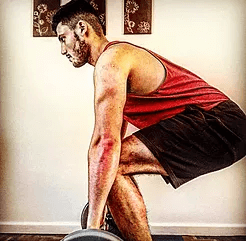
The Deadlift, it’s the mother of all exercises and fundamental in building muscle and providing a strong back which helps in all aspects of life. However, when done incorrectly it can cause some serious harm.
The deadlift specifically targets your posterior chain. Therefore, it builds up those postural muscles helping you move and exercise to your optimum function.
However, a common mistake a lot of people have the tendency to make is to hyper-extend through their lumbar spine (lower back) at the start and at the top of the lift. When I witness this, it is my cue to approach the lifter, as I feel it’s my duty as a chiropractor. This usually doesn’t go down to well as they feel I’m ‘that guy’ or the ‘form police’. But it isn’t too long until I see them in the waiting room in my clinic and the lower back has been circled to death on the pain diagram.
Ok enough ranting…and let’s start learning.
At the start of the deadlift, we should have a neutral spine and our bums should be kept low. At the top of the deadlift we should be driving through with our glutes to push our hips forward, instead of arching through our lower backs. So why do we find this movement so difficult?
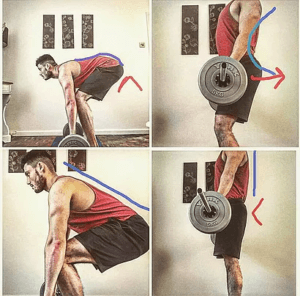
Well there are some people who just do the lift incorrectly due to observing others and there are some people who actually have a postural fault which makes it very difficult to obtain a neutral spine throughout the movement.
On the top 2 images you can see my tight hip flexors and weak glutes are not allowing me to obtain a neutral position. In addition, at the top of the lift my hips are driven forward by arching my lower back.
In the bottom image my spine is neutral and my glutes can hold a much lower starting position. Furthermore, at the top of the lift I am able to drive my hips forward through my glutes and this allows me to sustain a neutral spine through the movement.
Anterior pelvic tilt
Anterior pelvic tilt…this is a position where the pelvis is shifted forward and people will display hyper lordosis in their lower back (big curve) causing their buttocks to stick out (yes ladies I know your secret) and our stomachs to be pushed out.
We call this ‘lower cross syndrome’ our hip flexors and lower back muscles are tight due to having weak abdominal and glute muscles.

Hip flexors are the antagonist to the hip extensor muscles — they are located on the opposite side of the joint and move the body part in the opposite direction. Tight hip flexor muscles will prevent your hip extensors from fully straightening your pelvis as you come out of the deadlift and move into an upright position. Tight hip flexors also pull on your pelvis as you deadlift and make it difficult to keep your back straight.
*** KEY TIPS TO FIX POSTURAL FAULT***
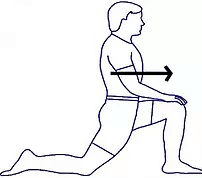
Kneeling Hip Flexor Stretch
The key here is to flatten out the lower back (no arching!) by squeezing your glutes. You’ll also fire the anterior core muscles (think about keeping your ribs down). Tilt the pelvis under (posterior tilt).
Bridge track
This targets weak/inhibited gluteals, hip flexors, abdominals.

Kick backs
This exercise will strengthen your abdominal and gluteus muscles and condition your back muscles.

Make sure to keep your extended leg in line with your body. Arching your back too much can cause back pain.
Quadruped track
This targets the glute and the deep back musculature. Also it places minimal load on the spine.
Only progress to more difficult tasks as endurance and strength increase
Breath and focus on muscles you are working
Maintain neutral pelvis and do not arch back

Now you have the tools to address the anterior pelvic tilt. Those glutes will be stronger and those hip flexors won’t be as tight. No more excuses for poor deadlift form.
Happy lifting and pain free living!